
There are plenty of physical barriers to getting fit.
When you’re carrying more weight than you should be, returning from an injury and trying to rediscover fitness that you remember having ten years ago, exercise is hard. There’s no point pretending otherwise.
But I’m increasingly realising that, for me at least, the physical barrier isn’t the hardest one to overcome.
It’s the mental one.
Over the last three days, I’ve found myself unintentionally testing that theory.
I started with a dedicated chest session in the gym. I went in, did my workout and left.
Nobody batted an eyelid.
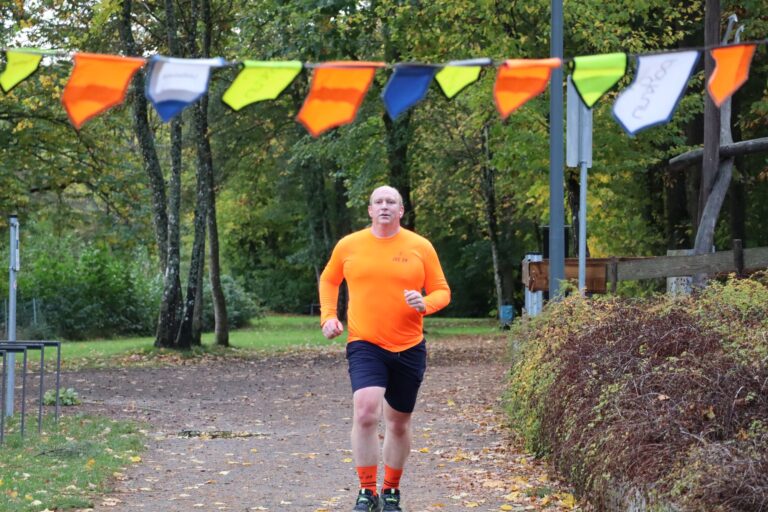
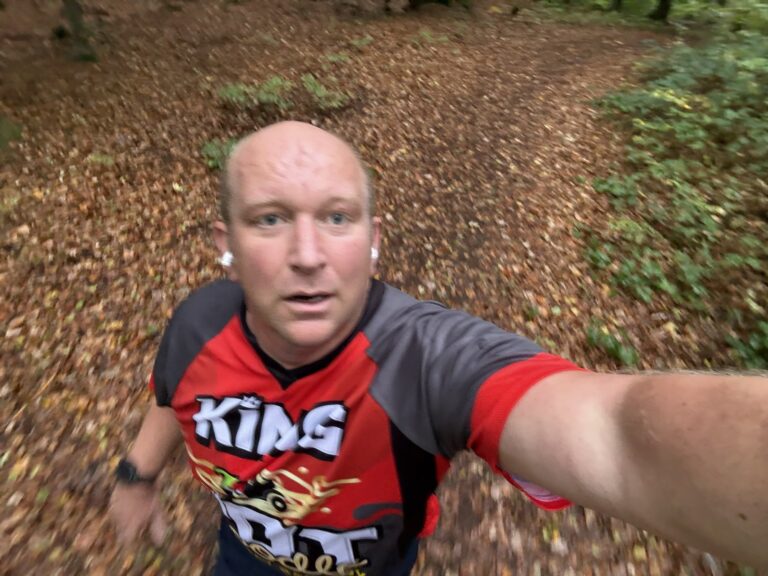
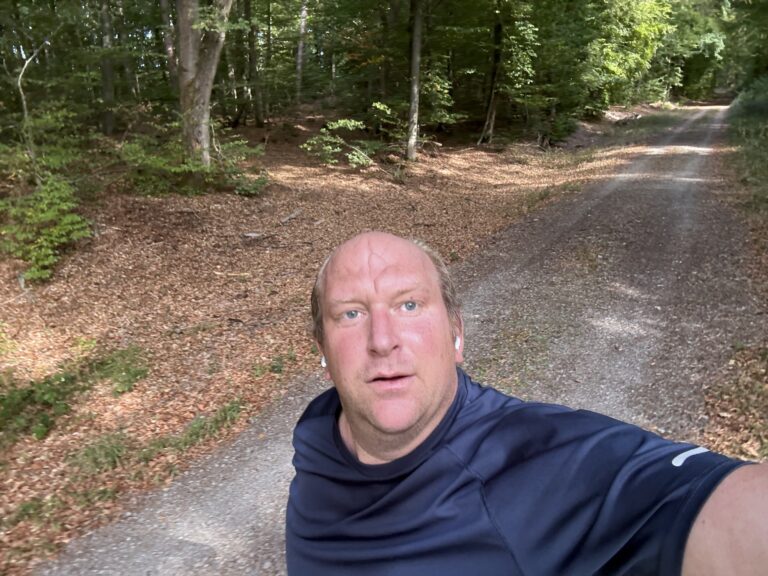
Then came my first tentative return to running after the calf injury that interrupted the progress I’d been making. I deliberately chose the woods. It was quiet, secluded and comfortable. I think I saw one other person.
Again, nobody cared.
Next was a mile in the swimming pool. This time it was busy. There were plenty of other people swimming and I had to share a lane with people who, in my head at least, belonged there more than I did.
Except I held my own.
I swam my mile, alongside everyone else, and got out.
Today I went back to the gym for a pull session. This time I went during peak hours. Lots of people, lots going on and precisely the sort of environment that I’ve previously found intimidating.
And guess what?
Nobody cared.
Nobody cared what I looked like. Nobody cared what weights I was lifting. Nobody cared how fit or unfit I was.
They were doing exactly the same thing I was.
Getting on with their own workout.
Then came tonight
Tonight was probably the biggest test.
It was my second return-to-running session as I carefully ease my injured calf back into running. I’m now following a six-week programme designed to progressively get me back to running 5km, and tonight’s session was another small step along that road.
But the location made this one different.
I ran at an athletics club.
Not on the track itself, but just off to the side. Around me were athletes training properly. People running quickly. People who looked like runners.
And there I was, in full view of most of them, alternating short running efforts with walking as part of my rehabilitation programme.
If you’d put me in that situation not very long ago, I know exactly where my attention would have been.
What do they think of me?
Do I look ridiculous?
Are people wondering what I’m doing here?
Tonight?
I didn’t care.
And, unsurprisingly, neither did anybody else.
Nobody laughed. Nobody stared. Nobody congratulated me either.
Because they were busy doing their thing while I was busy doing mine.
The only person who really cared about what I was doing was me.
And I was incredibly proud of myself.
Not because I’d run particularly far or particularly fast. I hadn’t.
I was proud because I’d got out there and completed another running session. My calf had behaved itself, the rehabilitation programme had moved another step forward and I’d done something that, mentally, would previously have been considerably harder than the physical exercise itself.
That feels like progress.
More than physical exercise
There’s another part of this that I’m appreciating more and more.
I’m doing all of this because I want to become physically healthier, fitter and stronger. But the benefits I’m getting from exercise aren’t confined to my body.
It genuinely makes me feel better.
A gym session gives me something tangible that I’ve achieved. A swim gives me time where the rest of the world largely disappears. A run, even one currently consisting of 90-second efforts, gives me a sense that I’m moving forward.
And every time I do something that I was tempted not to do, there’s a little bit more confidence there for next time.
For me, that’s where exercise and mental resilience seem to feed each other.
Sometimes I need the mental strength to get myself through the door, into the pool or out for the run. But once I’ve done it, the activity itself gives something back. I feel more positive, more capable and more confident that I can tackle the next challenge.
It doesn’t magically remove life’s stresses or make difficult things disappear. But it gives me an outlet from them and, increasingly, a sense that I’m doing something constructive for myself.
There’s also something powerful about keeping a promise you’ve made to yourself.
Tonight I could have looked at the athletes around me, felt uncomfortable and decided that I’d rather run somewhere quieter another day.
Instead, I did my session.
That’s not just training my calf.
That’s training my resilience too.
And perhaps that’s one of the biggest changes I’m beginning to notice. Exercise isn’t simply something I need to find the mental capacity to do. It’s becoming one of the things that helps create that mental capacity in the first place.
The barrier moves
There is a slightly ironic side to all of this.
Once I’ve managed to break through the mental barrier and actually start exercising, the physical barrier suddenly becomes the frustrating one.
I remember what I could do ten years ago.
I remember running being normal. I remember having a level of fitness where I could simply go out and train rather than having to carefully manage durations, recovery, injuries and effort.
Part of my brain still expects that version of me to turn up.
He doesn’t.
Not yet anyway.
That’s something else I’m having to learn: remembering what you used to be capable of doesn’t mean you should expect your body to reproduce it immediately.
There’s a process between here and there.
At the moment that process means strength training. It means swimming. It means carefully controlled running intervals. It means listening to my calf instead of stubbornly pushing through it.
Eventually, hopefully, those little running intervals become 5km.
Then we see where things go from there.
Nobody cares — and that’s liberating
There’s something wonderfully freeing about realising that most people really aren’t paying attention to you.
The person lifting twice as much as you in the gym probably isn’t judging you.
The faster swimmer in the next lane probably isn’t analysing your technique.
The athlete flying around the track probably isn’t wondering why the big bloke is jogging for 90 seconds and then walking.
They’re thinking about their own workout.
Just like you should be thinking about yours.
I’ve spent far too much time worrying about what other people might think when the reality is that the person placing the biggest barrier in front of me has usually been me.
The physical barriers are real. Fitness has to be earned. Weight has to be lost. Strength has to be rebuilt. Injuries need time and sensible rehabilitation.
But those are barriers I can work on.
The mental barrier is the one that can stop me from even starting.
And perhaps the most important thing I’m learning is that every time I break through that barrier and exercise, I make the mental barrier just a little bit easier to tackle the next time.
Over these last few days I’ve walked into the gym when it was busy. I’ve shared a swimming lane. I’ve started running again. And tonight I exercised surrounded by athletes without feeling that I somehow shouldn’t be there.
That’s progress that won’t appear on Garmin, Strava or the scales.
But it might be some of the most important progress I’ve made.
The moral of the story?
Do something for yourself.
Go to the gym. Get in the pool. Go for the walk. Start running. Ride the bike. Whatever your thing is, do it at whatever level you’re currently capable of doing it.
You don’t need to impress anybody.
You don’t need to compete with the person you were ten years ago.
And you certainly don’t need the approval of the people around you.
Do your thing. Let them do theirs.
Because looking after your body can do an enormous amount for your mind as well.
And you might discover that the barrier you were most afraid of was never really there.