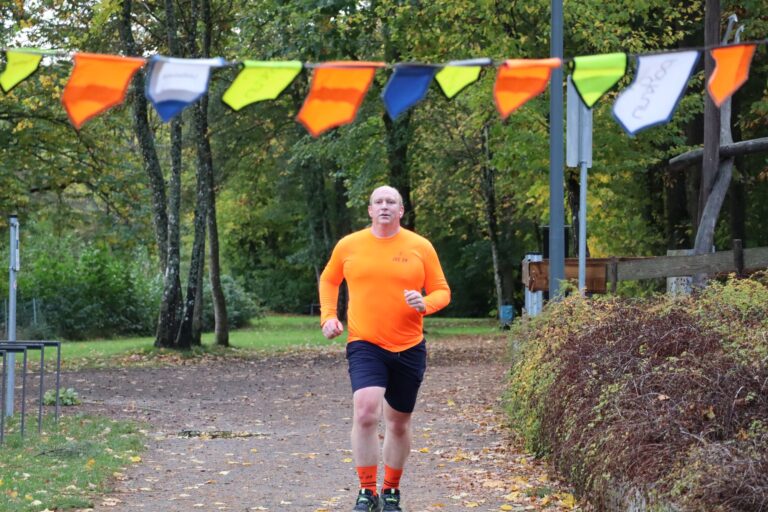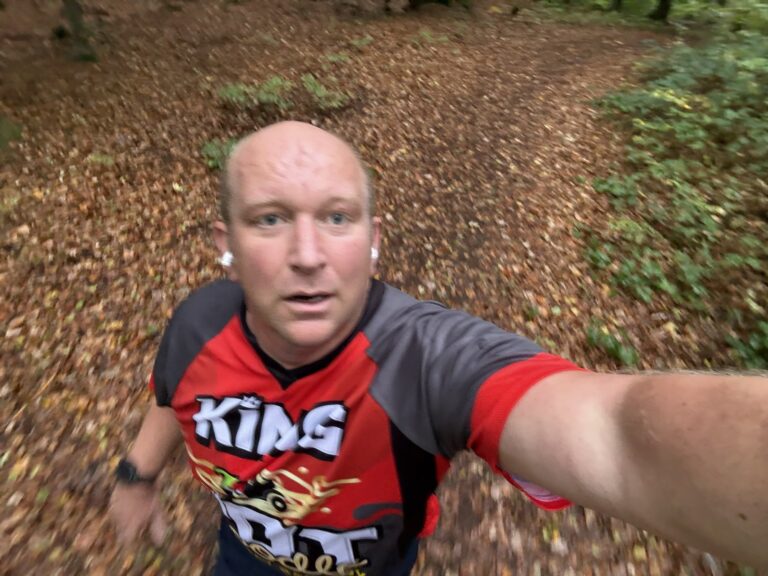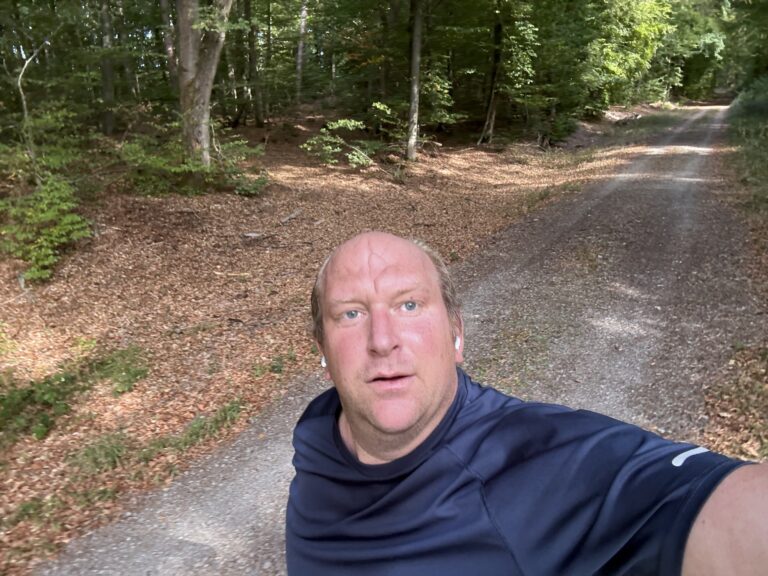

The difficult thing about having a particularly good training session is deciding what to do next. After Saturday’s 5km, I was on a genuine high. I had run faster than expected, completed the distance without aggravating my calf and come away feeling as though another piece of my old fitness had returned.
Naturally, my immediate response was to want more: more running, more distance and perhaps another attempt at the same pace. Part of me even began thinking about introducing faster efforts to find out what else might still be there.
That enthusiasm is useful. It is part of what keeps the journey moving, but it is also something I have had to actively control this week. Carrying momentum forwards and overreaching are not the same thing. At the moment, my biggest training challenge might not be finding the motivation to exercise; it might be having the discipline to stop myself doing too much.
The danger of feeling good
There are several good reasons for restricting my running mileage right now. The most obvious is that I am still carrying considerably more weight than I want to. Every running stride has a mechanical cost, and being cardiovascularly capable of running farther does not automatically mean my joints, tendons and muscles are ready for it.
I am also still rebuilding after a calf injury. It has responded well to the gradual return to running, but “it feels fine today” is not the same as “it is ready for everything I can throw at it.”
Then there is my right knee. For the last few years, whenever I have increased my running too aggressively, the knee has eventually reminded me that enthusiasm is not a training plan. The last time I tried introducing sprint efforts, I could hardly walk properly for a week afterwards. That is the sort of lesson I should only need to learn once.
The problem is that a successful session can make those memories feel less relevant. You finish feeling strong, the watch gives you an encouraging number and suddenly the sensible progression you had planned starts to look unnecessarily cautious. But caution is not a lack of ambition. Sometimes it is what allows ambition to survive.
The same ride, nearly eight minutes faster
Monday provided another encouraging sign. I repeated the same roughly 24-mile cycling route I had completed the previous Monday. The conditions were very similar and my intention was not to turn it into a time trial. I wanted to maintain a comfortable, easy effort and complete another useful aerobic session.
Despite that, I covered the ride almost eight minutes faster. That is exactly the sort of progress I want to see.
The important part is not simply that the ride was quicker. It is that I was quicker without deliberately demanding more from myself. I was not chasing the clock, attacking every incline or emptying myself to manufacture an improvement. The same sort of effort produced a better result.
That suggests adaptation. It suggests that the accumulated running, cycling, strength work, better recovery and shifting weight are beginning to work together. An older version of me might have treated those eight minutes as an invitation to push harder next time, but the approach I am trying to develop now is different. I want to treat it as evidence that I should keep doing what is working.
Training the whole system
That is probably the biggest change in how I am approaching fitness this time. For years, I have known that gym and strength work would help my running. Knowing it and doing it consistently have been two very different things.
I have never particularly enjoyed gyms. In the past, if I had the choice between going for a run and doing squats, controlled calf raises or stability work, the run would usually win. Running felt like the real activity, while strength training felt like something I was supposed to do alongside it.
Now, everything is beginning to feel like part of the same process. The cycling is developing aerobic fitness without placing the same impact through my legs. The gym work is helping to build the strength and resilience needed to tolerate more running later, while the running is being introduced in controlled doses rather than being expected to carry the entire fitness programme. Recovery, food choices and shifting weight support all of it.
No single session is responsible for the progress. The different parts are beginning to reinforce one another, and the part I am having to work hardest on is me. I need the discipline to keep turning up, but also the discipline to avoid constantly testing myself. I need to build a body that can cope with the work I eventually want to do, rather than repeatedly proving that my cardiovascular fitness is ahead of my physical resilience.
What I need now—not what I once did
I am fairly confident that, once I have shifted more weight and built sufficient strength, I could return to running 35–40km per week. That was probably a fairly normal week during my best running years, but it is not what I need now.
There would be little value in proving that I could force myself through that mileage for a week or two if the result was another calf problem, a painful knee or a month without running. My current job is to establish consistency.
That means doing enough running to allow my body to adapt, but not so much that recovery becomes a constant battle. It means accepting that cycling or strength work may sometimes be the better choice, even when the thing I most want to do is put my running shoes on again.
Momentum is not measured by how much punishment I can absorb. It is measured by whether I can keep moving forwards.
Technology as a guardrail
I use a Garmin Instinct 2X Solar, a dedicated GPS sports watch with wrist-based heart-rate monitoring. During a run, I can display my heart rate directly on the screen.

At the moment, if I am heading out for an easy run, I use roughly 140 beats per minute as a personal ceiling. That is not a universal number or a recommendation for somebody else; heart-rate ranges are individual. For me, right now, it is a useful guardrail.
If my heart rate begins climbing beyond where I want it, I can ease back. If it remains controlled, I know the cardiovascular demand is roughly where I intended it to be. Heart rate cannot tell me everything—it does not measure the mechanical impact passing through my calf or knee, and it does not replace paying attention to discomfort, fatigue or recovery—but it helps stop an “easy” run quietly becoming a hard one simply because I am feeling enthusiastic.
I am also becoming better at recognising the effort without checking the watch. My breathing, rhythm and general comfort are beginning to correspond with the number I expect to see. In that sense, the watch is gradually teaching me to understand my own effort more accurately.
You do not need a dedicated running watch to begin doing something similar. Strava is free to use for recording and sharing activities, and its mobile app can record outdoor exercise using a smartphone’s GPS. It can also connect directly to a Bluetooth Low Energy heart-rate monitor and display your live heart rate while recording.
Some of Strava’s more advanced training analysis requires a subscription, but basic activity recording does not. At the time of writing, Bluetooth chest straps and armbands are readily available for less than £40—one current example costs £24.99. Pair one with a phone and you have a relatively inexpensive way to record a route, pace and heart rate while checking your effort at safe moments.
The equipment is not the important part. The useful part is having an honest reference point.
Comparing yourself with yourself
Once you have some consistent data, you can begin making useful comparisons. Take two runs on a similar route in reasonably similar conditions and compare the pace with the heart rate required to produce it. Was Run B quicker at roughly the same heart rate? Was it the same pace at a lower heart rate? Did it simply feel more comfortable?
The same idea applies to cycling. Monday’s ride did not need to be a race against the previous week. I kept the effort controlled and the improvement appeared anyway.
One comparison does not prove everything. Heart rate can be affected by heat, hydration, sleep, stress, caffeine and many other variables. Repeated over time, however, the pattern can become informative.
The objective is not to win every comparison. It is to understand whether the work is gradually making the same task less costly—or allowing a little more output for the same sensible effort.
Keeping the journey honest
One of the main reasons I started Shift-Spark was to keep myself honest. I want to be able to look back over this journey and remember what really happened: the good sessions, setbacks, doubts, mistakes and decisions that allowed progress to continue. Hopefully, being honest about it may also help somebody else who wants to begin a journey of their own.
That means recording the exciting moments, such as Saturday’s 5km and Monday’s quicker ride. It also means acknowledging that progress creates its own risks. Confidence can tempt you to skip stages, a good result can make you feel invulnerable, and motivation can easily become impatience.
The work now is to carry the momentum forwards without allowing it to drag me somewhere my body is not yet ready to go. It is not all about winning, getting faster or becoming lighter. Sometimes progress is choosing an easy session when you want a hard one. Sometimes it is going to the gym when you would rather run. Sometimes it is finishing with energy left and trusting that there will be another opportunity tomorrow.
The aim is not to prove everything today. The aim is to remain capable of moving forwards tomorrow.